

Word In Black Article Details New Data Revealing How Young Black Americans See Race, Democracy, and Opportunity


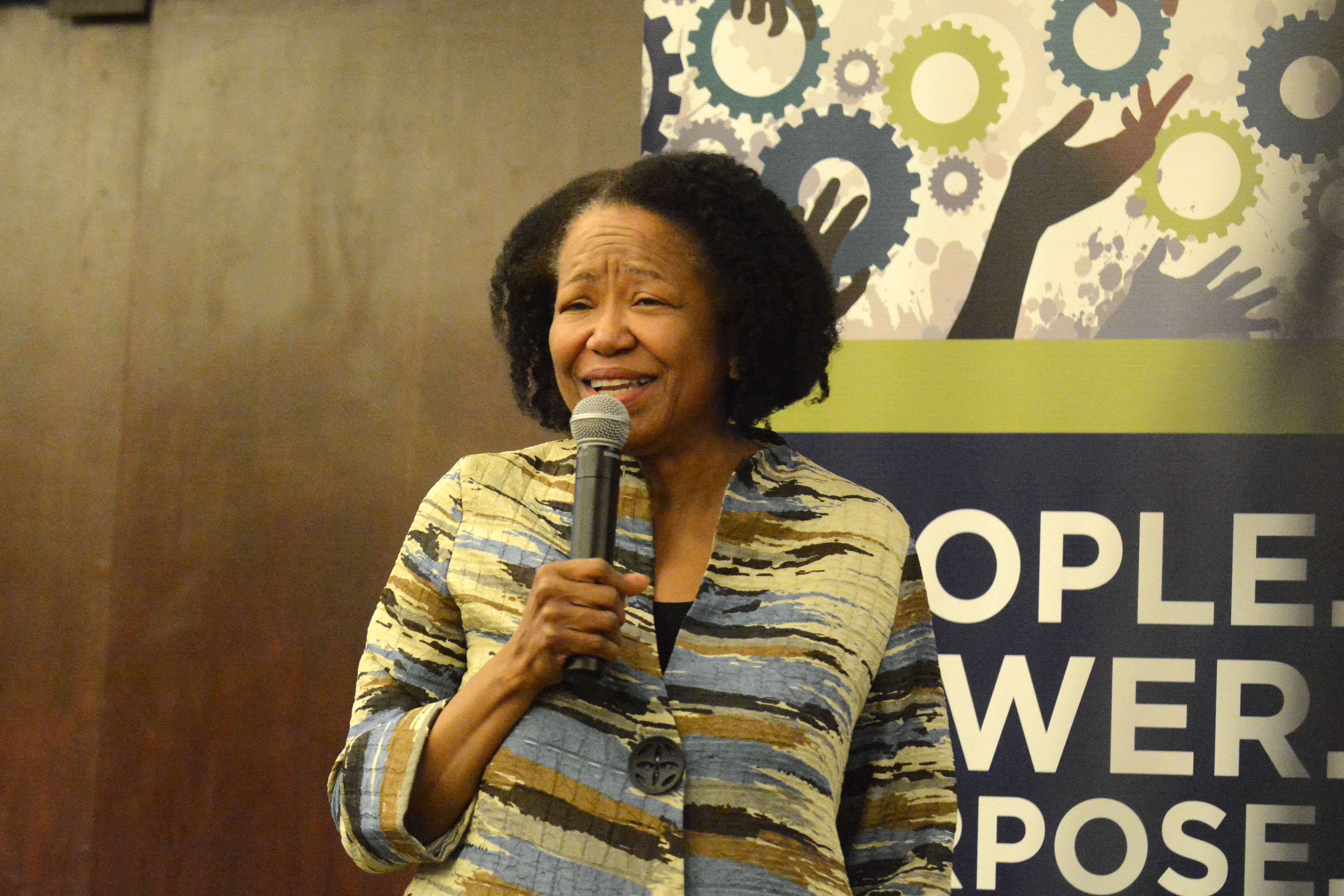
Dr. Gail C. Christopher
Dr. Gail C. Christopher examines a generation’s views in the National Collaborative for Health Equity's 4th Annual Heart of America Survey
WASHINGTON, DC, UNITED STATES, October 6, 2026 /EINPresswire.com/ -- Young Black Americans are more skeptical than their elders that the nation's laws, policies, and institutions work as promised, yet they remain proud of their country, committed to the ballot, and determined to make the American Dream real, according to a new article by Dr. Gail C. Christopher published in Word In Black.
The article, “Black America Still Has Hope. Its Young People Have Questions,” is based on the National Collaborative for Health Equity's (NCHE) 4th Annual Heart of America Survey. It tracked how Americans across generations view national unity, racism, equality, voting rights, the economy, and the path toward racial healing. A central finding is that young Blacks see deeper structural problems, demands an honest reckoning with the past, and holds America to a higher standard than those who came before them.
"Among Black Americans, the poll captured a desire for honest history and cross-racial understanding," writes Dr. Christopher, Executive Director of NCHE. "It reveals a people ready for genuine engagement and bold action towards delivering on America's grand promise of 'Life, Liberty and the pursuit of Happiness.'"
The complete article is available HERE
The online survey of 1,322 Americans, including 172 Black respondents, was conducted May 28 to June 3. Dr. Christopher describes what it found among Black Americans as "a complex emotional landscape: pride intertwined with worry; faith tempered by doubt."
More than 8 in 10 Black respondents said America is more divided now than ever before. Yet even amid what Dr. Christopher calls "fresh evidence of racial bias and hard-won equity gains slipping away," 71% said they are hopeful Americans can bridge their differences and unite the nation.
Pride in country remains strong. Twenty-six percent of Black respondents described themselves as "extremely proud" to be American, and another 26% rated their pride highly. Twenty-nine percent landed in the middle, while 19% said they do not feel proud. As Dr. Christopher notes, pride and criticism coexist: many who say they love their country also point to broad inequities and demand that the nation find a course toward fairness.
Like other Americans, Black respondents described feeling the squeeze of grocery bills and employment discrimination, racism at work and at play, and barriers to healthcare, quality education, and good jobs. Many seriously doubt that promises of justice and fairness will ever be realized and reward their centuries of hard work.
"Yet through every challenge and hardship, one force holds steady: resilience," she writes. "It sustains Black families and strengthens communities."
The article highlights several findings that frame the national conversation on race, democracy, and opportunity:
• Racism is widespread, and heaviest for the young. Nearly half of Black respondents (48%) reported personally experiencing racism, and 19% said they encounter it "often." Respondents ages 18 to 29 were roughly two to three times more likely than those over 75 to say they had faced racism.
• The vote remains central. With partisan gerrymandering and mail-in voting in the headlines, 80% of Black respondents rated voting rights as important. Dr. Christopher writes that access to the ballot box "remains at the heart of how Black Americans view their power."
• The American Dream feels out of reach. Fifty-five percent of Black respondents said the American Dream has slipped out of reach for most people, compared with 52% of all Americans. Only 45% of Black respondents said it is achievable.
• Young adults see inequality as systemic. Sixty-three percent of Black adults ages 18 to 29 said inequality is rooted in the nation's institutions and systems rather than individual choices, compared with just 23% of those ages 50 to 64. The 40-point gap is the widest divergence in the data.
• Honest history is a priority. Three-quarters of young Black adults called it "very important" that schools teach the full history of America, including slavery and racism, compared with 56% of those ages 50 to 64.
• Faith in the nation's promise is split by age. Only 26% of Black adults ages 18 to 29 said America lives up to its ideals of freedom, fairness, and equal opportunity "a great deal" or "quite a bit." Among those ages 50 to 64, the figure more than doubles, to 54%.
While older Black Americans tend to explain today's challenges through personal action, younger Black Americans frame them in terms of structure and policy. Dr. Christopher sees their skepticism as "an age-appropriate demand for accountability," with younger respondents seeing a country falling short of its stated promises.
That caution extends to national institutions. Only 66% of Black adults ages 18 to 29 see the federal government's role in protecting voting rights as important, compared with 82% of those 65 and older. Neighborhood community also matters somewhat less to the young: 69% of 18- to 29-year-olds consider it important, a figure that rises with each age group to 79% among those 65 and older.
For a young Black population "already squeezed by rising costs and escalating bias," Dr. Christopher writes, doubts about the American Dream diminish a core national promise that hard work guarantees a better life. "For many young Blacks, the country is not living up to that promise."
The 19-point gap on teaching history, she adds, "points to a generation that treats historical honesty as foundational, not optional."
The findings arrive as debates over voting access, the teaching of American history, and the rollback of equity programs are reshaping public life. The survey suggests that the youngest Black voters are neither disengaged nor resigned. They are holding the nation to its word.
"Despite carrying burdens from the past," Christopher writes, "Black Americans persistently believe this country can and will rise to meet its highest ideals; they said plainly that they love this nation and treasure the right to vote."
The article offers policymakers, educators, funders, community leaders, and journalists a data-grounded view of how a rising generation understands race and opportunity in America, and of what it will take to earn its trust. For institutions seeking to engage young Black Americans, the message is clear: honesty about history, structural solutions to structural problems, and protection of the vote.
****
About Dr. Gail C. Christopher
Dr. Gail C. Christopher is the Executive Director of the National Collaborative for Health Equity, Senior Scholar at the Center for Advancement of Well-Being at George Mason University, and former Senior Advisor and Vice President of the W.K. Kellogg Foundation.
About the National Collaborative for Health Equity
Founded in 2014, NCHE was established to promote health equity through action, leadership, inclusion, and collaboration. We work to create environments that foster the best possible health outcomes for all populations, regardless of race, ethnicity, socioeconomic status, or nativity. NCHE also works to improve conditions for health and well-being, including housing, education, income and wealth, and the physical and social environment. Further, we must address historical and contemporary structural, institutional, and interpersonal racism, which fuels inequities in our society.
The full 2026 Heart of America poll can be found at: https://www.nationalcollaborative.org/our-work/data-tools-resources/4th-annual-heart-of-america-national-survey-america-at-250/
Michael K. Frisby
Frisby & Associates
+1 202-625-4328
Legal Disclaimer:
EIN Presswire provides this news content "as is" without warranty of any kind. We do not accept any responsibility or liability for the accuracy, content, images, videos, licenses, completeness, legality, or reliability of the information contained in this article. If you have any complaints or copyright issues related to this article, kindly contact the author above.
