
Deepen AI Launches Self-Serve Targetless Calibration API for Autonomous Vehicles and Robots
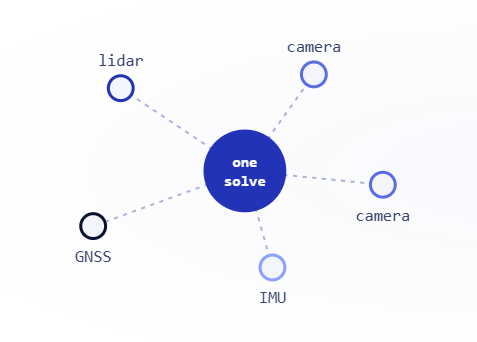
Every sensor solved together, in one run
Teams can now calibrate lidar-camera rigs from recordings and see a free preview before paying anything. No targets, no calibration bay, no site visit
With Deepen Calibrate, an engineer can take a recording from yesterday's drive and have a validated, reviewable calibration in minutes.”
SANTA CLARA, CA, UNITED STATES, October 6, 2026 /EINPresswire.com/ -- Deepen AI, the AI data infrastructure company for Physical AI, today announced the launch of Deepen Calibrate, a self-serve, targetless multi-sensor calibration service available as a web app and an API. Engineers upload an existing ROS1 .bag, ROS2 .db3 or .mcap recording and, typically within 15 to 25 minutes, see a free before-and-after preview with per-sensor confidence. They pay only if they choose to download the extrinsics and the full quality report.— Mohammad Musa, CEO of Deepen AI
Calibration errors are small, silent and expensive.
Extrinsic calibration determines where every lidar point lands in a camera image. A 1° rotational error shifts a point 30 meters away by roughly half a meter. That is enough to project a pedestrian's points onto the vehicle beside them, corrupt fused training labels, and cause tracking to mis-associate objects. Perception quietly degrades, and nothing in the pipeline points back to calibration as the cause.
Most teams still calibrate with checkerboard, ChArUco or AprilGrid targets. That requires a dedicated capture session, often a calibration bay or site visit, and usually solves one sensor pair at a time. As fleets grow and sensors get swapped, knocked or remounted, recalibration becomes a recurring engineering bottleneck.
Calibrate from data you already record
Deepen Calibrate removes the target session entirely. A short drive through a mostly static scene, as little as 30 seconds, and a rough position for each camera, taken from CAD, a URDF or the recording's own transforms, are all it needs. Every sensor in the recording is solved jointly in a single run, so errors do not stack up across sensor pairs and the whole rig comes back in one consistent model.
Key capabilities:
- Targetless - One run returns lidar-camera extrinsics for every camera in the recording, for recordings up to 50 GB.
- Works with existing formats - Accepts ROS1 .bag, ROS2 .db3 and .mcap files unmodified, or a zipped ROS 2 bag folder, with support for Velodyne, Ouster, Hesai, RoboSense and other point-cloud lidars.
- Transparent results - Every job returns per-sensor confidence scores, quality flags, error statistics and a visual overlay report showing the seed-versus-recovered delta, so reviewers can judge the result rather than trust a matrix.
- Try before you pay - Every run shows a free before-and-after preview of the lidar on each camera, with per-pair confidence. Teams pay $150 only if they choose to download the result.
- Measured repeatability - Independent 30-second recordings on our test vehicle agree to within 0.1° angular, 1 ms temporal and 2 cm translation.
- Free eligibility check - The open-source Data Checker CLI (deepen-bag-check, Apache 2.0) checks a recording locally. No upload, no account.
The service supports passenger and commercial vehicles, delivery and mobile robots, construction, mining and agricultural machines, drones, ships and tracked platforms, and other sensor-equipped platforms that move through their environment.
"Calibration is the foundation every downstream step depends on. If the extrinsics are wrong, every fused label and every perception metric inherits that error," said Mohammad Musa, Co-Founder and CEO of Deepen AI. "Teams should not need a target board and a calibration bay to get it right. With Deepen Calibrate, an engineer can take a recording from yesterday's drive and have a validated, reviewable calibration in minutes. Re-running after every sensor swap becomes routine instead of a project. Through the end of the year, our calibration engineers will work alongside any team that wants to try it on its own data."
Built on production experience
Deepen AI has calibrated production sensor rigs for automotive and robotics teams since 2017. The targetless method is patented and is the same engine used in Deepen's enterprise calibration engagements.
Pricing and availability
Deepen Calibrate is available today at targetless.deepen.ai as a web app and an API. Every run includes a free preview; downloading the result costs $150 at launch pricing, 90% off the $1,500 list price, through December 31, 2026, with no monthly commitment. During the same Q4 launch period, Deepen calibration engineers support any team that wants to try the product, from preparing a recording and setting camera positions to running the first calibration together. Sign-in requires a work or university email.
Self-serve calibration currently covers lidar-camera extrinsics. Multi-lidar and full-stack calibration, including IMU, GNSS/INS, radar, camera intrinsics and inter-sensor time offsets, are available through Deepen enterprise engagements. For teams with data-residency or export-control requirements, a customer-hosted deployment runs the same engine inside the customer's own environment, with an AWS Marketplace listing coming soon.
See real before-and-after samples and run a free preview on your own recording at targetless.deepen.ai. For help with a first run, contact calibrate-support@deepen.ai.
About Deepen AI
Deepen AI is the calibrated, verified, neutral data stack behind Physical AI. Its platform supports the full multi-sensor data lifecycle, from sensor calibration and data annotation to validation and dataset quality management, helping automotive, robotics and autonomy teams move from prototype to production with greater confidence. Learn more at deepen.ai.
Mohammad Musa
Deepen AI
8575000387 ext.
Visit us on social media:
LinkedIn
Legal Disclaimer:
EIN Presswire provides this news content "as is" without warranty of any kind. We do not accept any responsibility or liability for the accuracy, content, images, videos, licenses, completeness, legality, or reliability of the information contained in this article. If you have any complaints or copyright issues related to this article, kindly contact the author above.
